AI for Car Dealerships: Why Artificial Intelligence Is Essential for Modern Dealerships
Why AI Is Becoming Essential for Modern Car Dealerships
The automotive industry has changed dramatically over the past decade. Today’s car buyers are more informed, more connected, and more demanding than ever before. Before stepping into a showroom, most customers have already researched vehicles, compared prices, read reviews, and sometimes even chosen the exact model they want.
Because of this shift, traditional dealership processes are no longer enough. Speed, personalization, and availability have become the new standard. This is where Artificial Intelligence (AI) is transforming how dealerships operate.
AI is no longer a futuristic concept—it is quickly becoming an essential tool for modern car dealerships that want to stay competitive, increase sales, and deliver better customer experiences.
The Changing Behavior of Car Buyers
Modern customers expect quick responses and instant access to information. When a potential buyer submits a form on a dealership website or sends a message through social media, they expect a reply within minutes—not hours.
Studies consistently show that dealerships responding within the first few minutes dramatically increase their chances of converting a lead into a sale. However, maintaining that speed manually is extremely difficult, especially during busy hours, after business hours, or when staff are already assisting customers.
AI helps solve this challenge by enabling dealerships to respond instantly to inquiries, ensuring no potential customer is left waiting.
AI Enables Instant Lead Response
One of the biggest challenges dealerships face is handling incoming leads quickly and efficiently. Leads can come from many different channels such as:
Website forms
Chat widgets
Facebook Messenger
SMS messages
Email inquiries
Marketplace listings
Without automation, these leads often sit unattended until a salesperson becomes available.
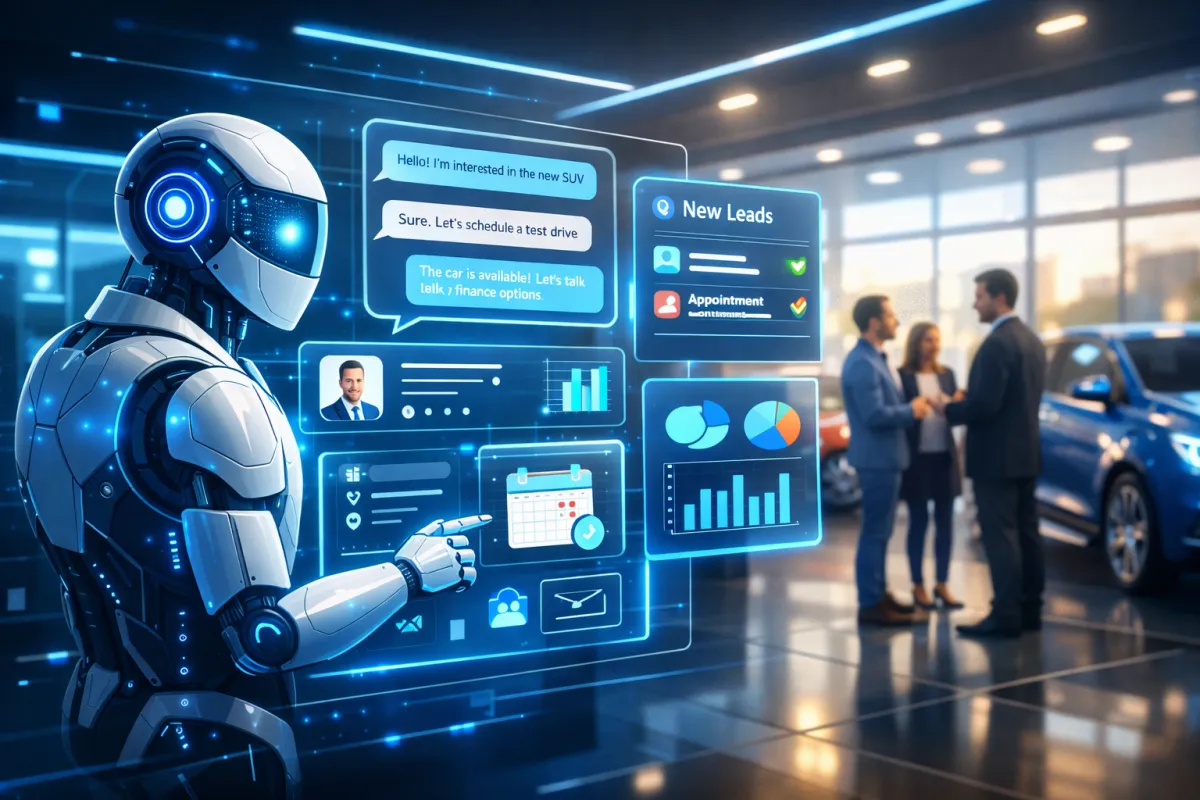
AI-powered systems can respond immediately to every inquiry, providing helpful information about vehicle availability, pricing, financing options, and scheduling test drives. This immediate engagement keeps the conversation active and dramatically increases the likelihood of converting that lead into a customer.
AI Helps Dealerships Never Miss a Lead
Missed calls and unanswered messages are one of the most common reasons dealerships lose potential customers. When buyers are researching vehicles, they often contact multiple dealerships at the same time.
If one dealership responds instantly while another takes hours to reply, the faster dealership usually wins the sale.
AI works around the clock, ensuring that every message, question, or inquiry receives a response—even outside business hours. Whether it's midnight or early morning, AI systems can continue conversations, collect customer details, and schedule appointments automatically.
This constant availability allows dealerships to capture opportunities that would otherwise be lost.
AI Improves Customer Experience
Customer experience plays a major role in today’s automotive sales process. Buyers want clear answers, fast responses, and helpful guidance.
AI systems can assist customers by answering common questions such as:
Is this vehicle still available?
What is the price of this car?
Can I schedule a test drive?
What financing options are available?
Do you accept trade-ins?
Instead of forcing customers to wait for a human response, AI can provide immediate assistance while still routing more complex questions to dealership staff when necessary.
This combination of automation and human support creates a smoother, more satisfying buying experience.
AI Supports Dealership Sales Teams
AI is not meant to replace dealership staff. Instead, it supports them by handling repetitive tasks and freeing up time for sales professionals to focus on closing deals.
Sales teams often spend significant time responding to the same questions repeatedly, following up with leads, and managing appointment scheduling.
AI can automate many of these tasks, including:
Lead qualification
Appointment booking
Follow-up reminders
Basic customer inquiries
Data collection
With these tasks handled automatically, sales staff can focus their energy on engaging serious buyers and providing personalized service.
AI Helps Dealerships Stay Competitive
The automotive industry is becoming increasingly competitive. Online marketplaces, digital dealerships, and tech-driven competitors are changing how cars are bought and sold.
Dealerships that continue relying solely on traditional processes risk falling behind.
AI gives modern dealerships a powerful advantage by improving response speed, increasing lead conversion rates, and delivering better customer engagement.
As more dealerships begin adopting AI-driven tools, those who delay implementation may struggle to keep up with customer expectations.
AI Generates Valuable Data Insights
Another major benefit of AI is its ability to collect and analyze customer data.
Every conversation, inquiry, and interaction provides valuable insights into customer behavior. AI systems can track patterns such as:
Which vehicles receive the most interest
What questions customers ask most frequently
When most inquiries occur
Which marketing channels generate the best leads
Dealership managers can use this information to improve marketing strategies, inventory planning, and sales processes.
The Future of AI in Automotive Sales
AI adoption in the automotive industry is still growing, but it is already reshaping how dealerships interact with customers.
Future AI systems will likely offer even more advanced capabilities such as:
Predictive lead scoring
Personalized vehicle recommendations
Automated follow-up sequences
Voice-based AI assistants for phone calls
Intelligent service appointment management
Dealerships that start integrating AI today will be better prepared for these advancements.
Final Thoughts
Artificial Intelligence is quickly becoming a key part of modern dealership operations. By improving response times, enhancing customer experiences, and supporting sales teams, AI helps dealerships operate more efficiently while increasing their chances of closing more deals.
As customer expectations continue to rise, dealerships that embrace AI will be in a stronger position to compete, grow, and succeed in the evolving automotive marketplace.
For modern car dealerships, AI is no longer just an option—it is becoming a necessity.
